The poem
Yo, como tú,
amo el amor, la vida, el dulce encanto
de las cosas, el paisaje
celeste de los días de enero.
También mi sangre bulle
y río por los ojos
que han conocido el brote de las lágrimas.
Creo que el mundo es bello,
que la poesía es como el pan, de todos.
Y que mis venas no terminan en mí
sino en la sangre unánime
de los que luchan por la vida,
el amor,
las cosas,
el paisaje y el pan,
la poesía de todos.
— Roque Dalton, "Como tú," Poemas Clandestinos, 1974
Listen — readings on YouTube
Search results — Dalton readings the poem aloud and contemporary readings in Spanish and translation.
In English
Like you,
I love love, life, the sweet smell
of things, the sky-blue
landscape of January days.
And my blood boils up
and I laugh through eyes
that have known the buds of tears.
I believe the world is beautiful
and that poetry, like bread, is for everyone.
And that my veins don't end in me
but in the unanimous blood
of those who struggle for life,
love,
little things,
landscape and bread,
the poetry of everyone.
— translation by Jack Hirschman, widely circulated
The man
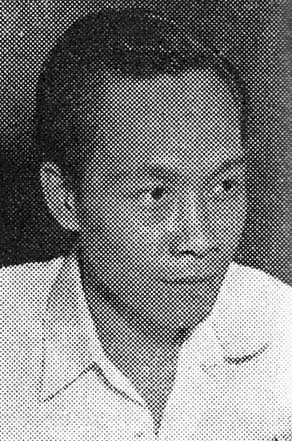
Roque Dalton García was born in San Salvador in 1935. He went to law school in Chile and Mexico, became a communist while abroad, and returned to El Salvador to organize. The state arrested him repeatedly through the 1960s; he escaped a death sentence in 1964 only because an earthquake collapsed the prison wall and he walked out. He went into exile — Cuba, Czechoslovakia, North Vietnam — and wrote feverishly: poetry, journalism, the novel Pobrecito poeta que era yo.
In 1973 he returned clandestinely to El Salvador to fight with the Ejército Revolucionario del Pueblo (ERP). He wrote the Clandestine Poems in 1974 under five different invented identities — a bricklayer, a teacher, a sociology student — to embed poetry inside the daily life of revolutionary struggle. On May 10, 1975, four days before his fortieth birthday, he was tortured and shot by his own ERP comrades on a bogus accusation of being a CIA agent. The murder was ordered by people who later admitted, when the truth came out in the 1990s, that the charge was false. His body was never recovered.
Why this poem first
"Como tú" is the door into the entire volume because of what it refuses. Revolutionary poetry is supposed to harden — to scold, to mobilize, to harden the line between us and them. Dalton refuses. He opens with the softest possible declaration: I, like you, love love. Tenderness is the political position. The poem then does its second move: the veins that begin in love do not end in the self; they end in the unanimous blood of those who struggle. This is not abstract solidarity. It is a circulatory system. The poem pumps love into politics and politics into love and refuses to let either of them stand alone.
This is also why "Como tú" anchors a volume called Reading the Removed. The people U.S. policy removes are not abstract numbers; they are people who, like you, love love. Returning to that simple sentence is the discipline the rest of the volume builds on.
Carry it
1 · Where do your veins end? Whose struggle is in your blood, even when you are not present to it?
2 · Dalton was killed by his own comrades on a false charge. What does that change about how you read the poem?